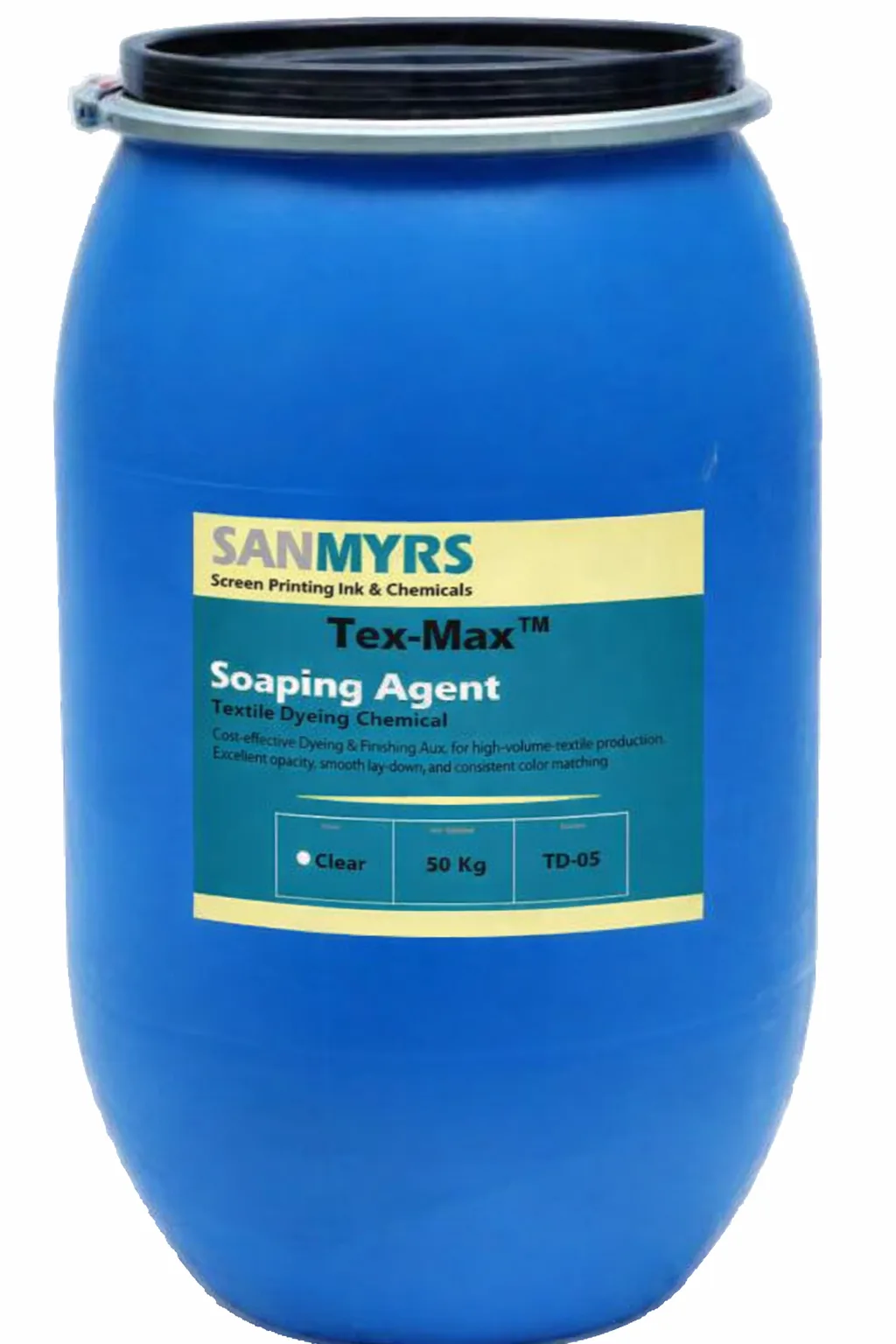
Soaping Agent
Textile soaping agents are anionic and non-ionic surfactant blends specifically designed for the post-dyeing soaping wash stage, where their primary function is to remove unfixed and hydrolyzed reactive dye molecules from the fiber surface and prevent them from re-deposition onto adjacent fabric or fiber surfaces that would cause shade contamination and reduced rub fastness. The anti-redeposition polymer component of soaping agents keeps hydrolyzed dye dispersed in the wash liquor until it is drained away rather than re-adsorbing onto clean fabric. Effective soaping at 95°C for 15–20 minutes is critical for achieving commercial rub and wash fastness ratings.
Key Applications
- Post-reactive dyeing soaping wash on cotton and viscose
- Removal of hydrolyzed dye from fiber surfaces after reactive printing
- Anti-redeposition soaping in garment and package dyeing
- Vat dye soaping after oxidation and development
Frequently Bought Together
Wetting Agent
Textile wetting agents are anionic or non-ionic surfactant compounds that dramatically reduce the surface tension of aqueous dyebaths and process liquors, enabling rapid and uniform penetration of process chemicals into the dense fiber structure of yarn packages, fabric rolls, and garment loads.
Textile Dyes & AuxiliariesSequestering Agent
Textile sequestering agents are chelating compounds — primarily phosphonate, EDTA, or polycarboxylate chemistry — that bind and inactivate calcium, magnesium, iron, and other heavy metal ions present in hard process water and in the textile substrate itself, preventing their interference with dye chemistry, bleaching performance, and auxiliaries stability.
Textile Dyes & AuxiliariesLeveling Agent
Textile leveling agents are amphiphilic surfactants or polymer compounds that control the rate of dye uptake from the dyebath onto fiber, retarding initial dye strike and promoting migration of pre-absorbed dye from heavily dyed areas to lighter areas, ultimately producing uniform, level dyeings across the entire substrate.