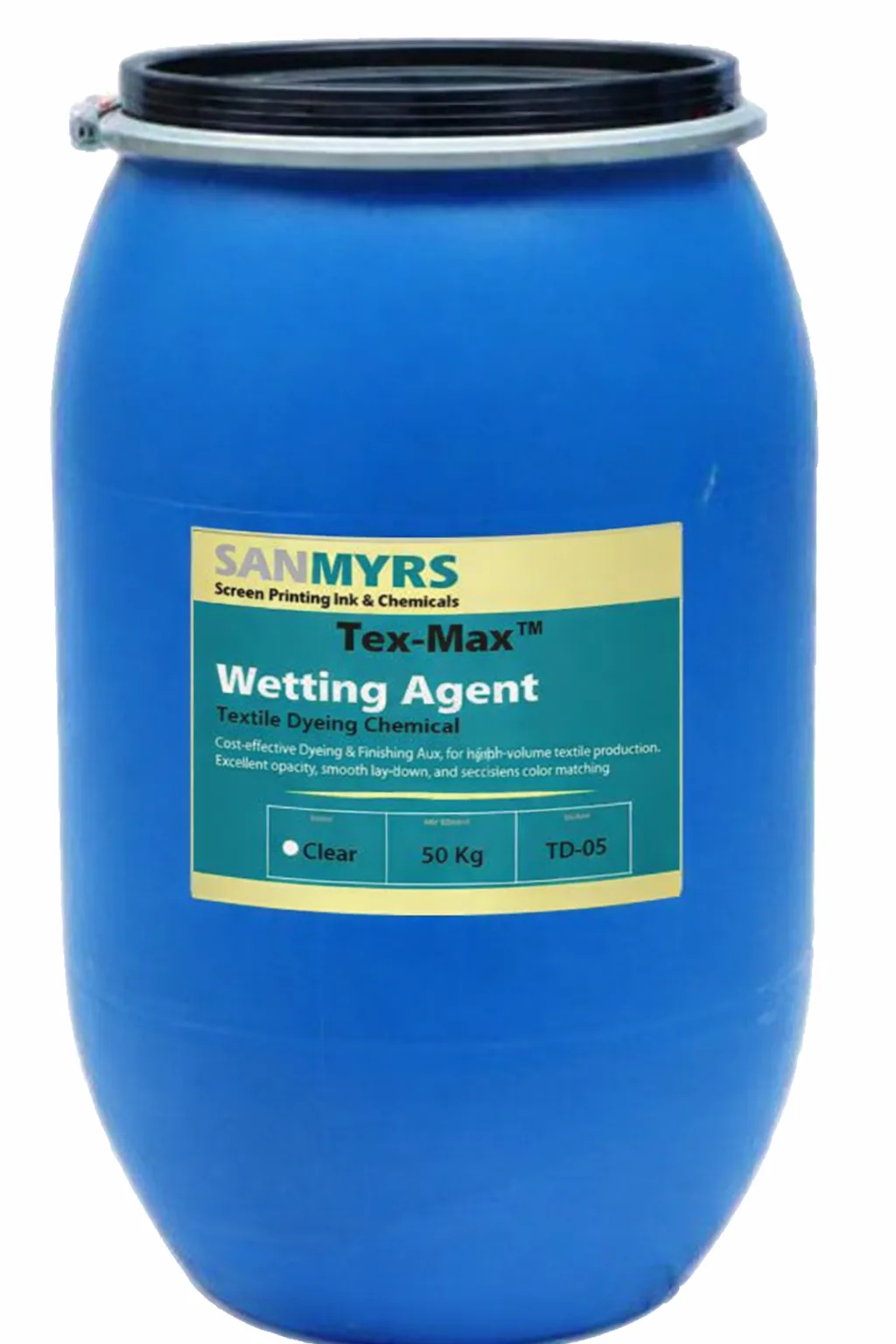
Wetting Agent
Textile wetting agents are anionic or non-ionic surfactant compounds that dramatically reduce the surface tension of aqueous dyebaths and process liquors, enabling rapid and uniform penetration of process chemicals into the dense fiber structure of yarn packages, fabric rolls, and garment loads. By eliminating trapped air pockets within fiber bundles and fabric constructions, wetting agents ensure that dyebath chemistry reaches all fiber surfaces simultaneously, preventing the uneven dye uptake and streaky dyeing defects caused by poor liquor penetration. Effective at very low addition rates (0.5–2 g/L), wetting agents are standard additions to scouring, dyeing, and finishing liquors.
Key Applications
- Rapid fabric and yarn wetting before dyeing and finishing operations
- Scouring and desizing baths to improve liquor penetration
- Bleaching and oxidation bath penetration aid
- Dyebath additive for even dye uptake on dense yarn packages
Frequently Bought Together
Sequestering Agent
Textile sequestering agents are chelating compounds — primarily phosphonate, EDTA, or polycarboxylate chemistry — that bind and inactivate calcium, magnesium, iron, and other heavy metal ions present in hard process water and in the textile substrate itself, preventing their interference with dye chemistry, bleaching performance, and auxiliaries stability.
Textile Dyes & AuxiliariesLeveling Agent
Textile leveling agents are amphiphilic surfactants or polymer compounds that control the rate of dye uptake from the dyebath onto fiber, retarding initial dye strike and promoting migration of pre-absorbed dye from heavily dyed areas to lighter areas, ultimately producing uniform, level dyeings across the entire substrate.
Textile Dyes & AuxiliariesDispersing Agent
Textile dispersing agents are anionic polymer surfactants — naphthalene sulfonate formaldehyde condensates or lignosulfonates — that maintain the colloidal stability of disperse dye particles and other insoluble chemicals in aqueous dyebaths at elevated temperatures and pH extremes, preventing particle agglomeration and precipitation onto the fabric surface as dye spots and oligomer deposits.