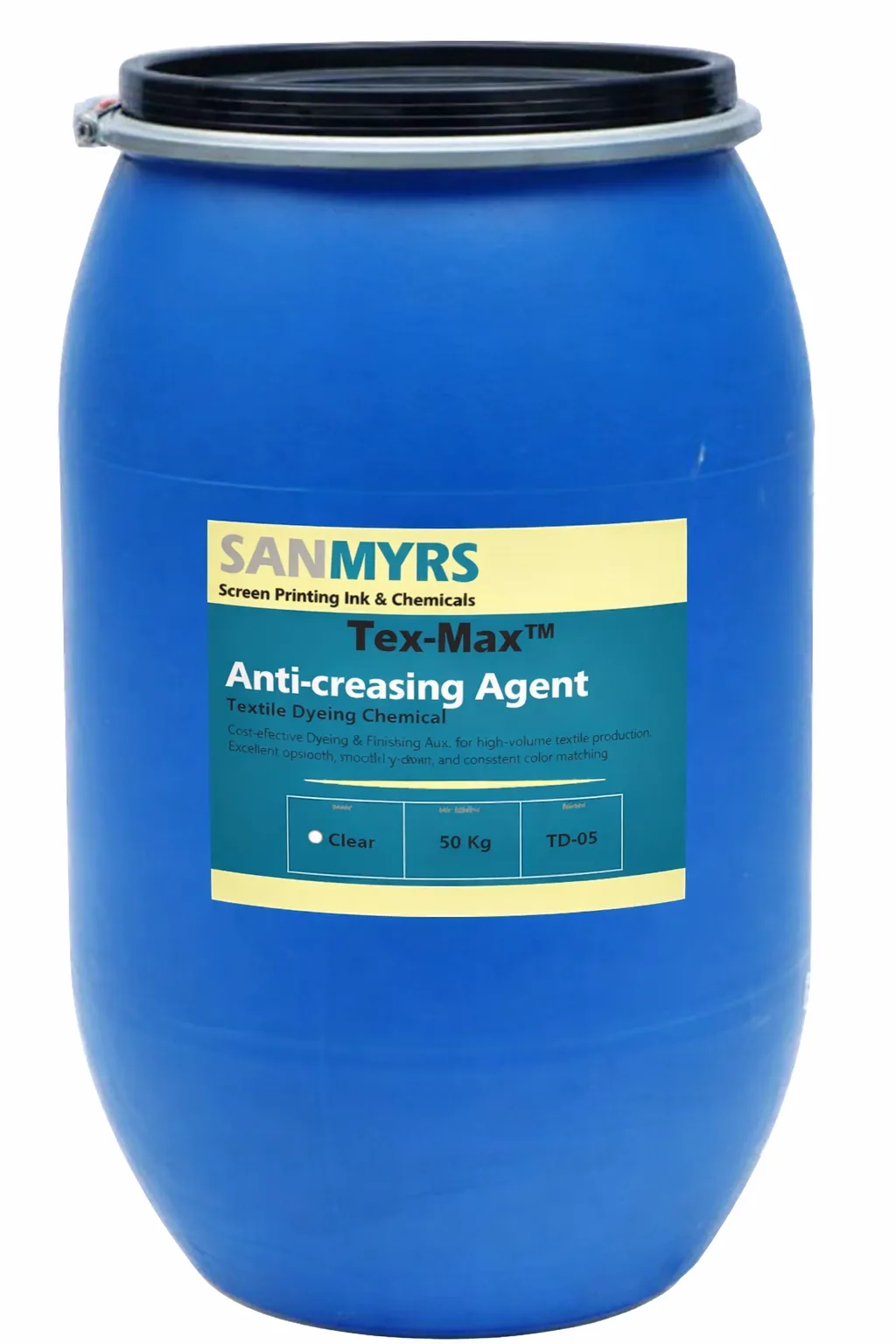
Anti-creasing Agent
Textile anti-creasing agents are lubricant polymer emulsions that coat fabric surfaces and fiber-fiber contact points within jet dyeing machines to reduce inter-fiber friction and fabric-machine contact forces, preventing the formation of permanent crease marks and rope marks in the fabric rope during high-temperature machine processing. Crease damage is a particularly serious defect risk in woven synthetics, acetate, and high-twist worsted wool fabrics processed in jet dyeing machines, where tight rope formation under tension and heat can cause permanent fabric distortion. Anti-creasing agents also facilitate smooth fabric rope movement, reducing machine load and power consumption.
Key Applications
- Crease mark and rope mark prevention in jet dyeing of woven fabrics
- Protection of crease-sensitive acetate, triacetate, and cupro fabrics
- Anti-friction lubrication in winch, jigger, and overflow dyeing machines
- Reducing fabric distortion risk in high-temperature synthetic dyeing
Frequently Bought Together
Wetting Agent
Textile wetting agents are anionic or non-ionic surfactant compounds that dramatically reduce the surface tension of aqueous dyebaths and process liquors, enabling rapid and uniform penetration of process chemicals into the dense fiber structure of yarn packages, fabric rolls, and garment loads.
Textile Dyes & AuxiliariesSequestering Agent
Textile sequestering agents are chelating compounds — primarily phosphonate, EDTA, or polycarboxylate chemistry — that bind and inactivate calcium, magnesium, iron, and other heavy metal ions present in hard process water and in the textile substrate itself, preventing their interference with dye chemistry, bleaching performance, and auxiliaries stability.
Textile Dyes & AuxiliariesLeveling Agent
Textile leveling agents are amphiphilic surfactants or polymer compounds that control the rate of dye uptake from the dyebath onto fiber, retarding initial dye strike and promoting migration of pre-absorbed dye from heavily dyed areas to lighter areas, ultimately producing uniform, level dyeings across the entire substrate.