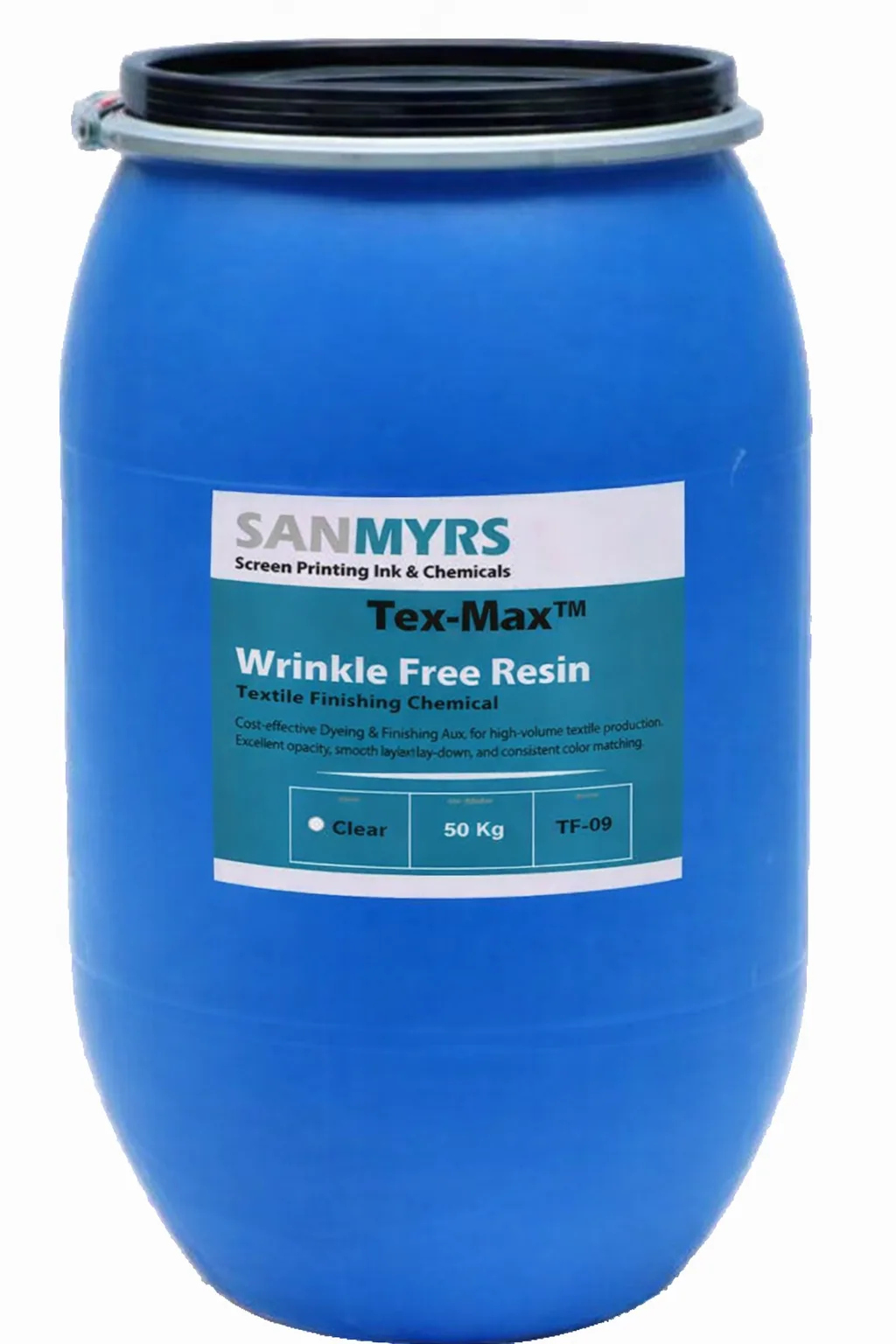
Wrinkle Free Resin
Wrinkle-free and easy-care textile resins are dimethyldihydroxyethylene urea (DMDHEU) or glyoxal-based crosslinking agents that react with adjacent cellulose hydroxyl groups in cotton and cotton-blend fabrics under acid catalyst and heat conditions to introduce permanent crosslinks within the fiber structure that resist deformation under moisture and mechanical stress, producing fabrics with dramatically improved wrinkle recovery, wash-and-wear performance, and dimensional stability. The crosslinking chemistry sets the fiber in its flat, uncreased configuration, enabling shirts and trousers to maintain a neat appearance after domestic washing without ironing. Fluorocarbon-free formaldehyde-releasing and low-formaldehyde DMDHEU grades meet OEKO-TEX formaldehyde limits.
Key Applications
- Wrinkle-free and easy-care finishing of cotton shirts and trousers
- Wash-and-wear treatment of cotton, linen, and cotton-polyester blends
- Permanent press finishing of uniform and workwear fabrics
- Shape retention finishing for cotton knitwear to reduce garment distortion
Frequently Bought Together
Silicone Softener
Polydimethylsiloxane (PDMS) silicone softener is the most widely used textile softening technology, imparting a characteristic smooth, silky, and lubricating hand feel to synthetic and cellulosic fabrics through the formation of an oriented PDMS layer on fiber surfaces that dramatically reduces inter-fiber friction coefficients.
Textile Dyes & AuxiliariesHydrophilic Silicone Softener
Hydrophilic silicone softeners are polyether-modified polysiloxane compounds engineered to combine the soft, smooth hand-feel properties of conventional silicone with a hydrophilic molecular architecture that preserves or enhances the moisture wicking and absorbency of treated fabrics — a property that standard PDMS silicones compromise through their hydrophobic character.
Textile Dyes & AuxiliariesAmino Silicone Softener
Amino-functional silicone softeners contain reactive amine groups (primary, secondary, or tertiary amino groups) grafted onto the polysiloxane backbone, enabling the silicone to form strong electrostatic and reactive bonds with anionic fiber surfaces — particularly cotton and wool — resulting in significantly more durable softening effects and an exceptionally soft, cashmere-like tactile quality compared to unfunctionalized PDMS systems.