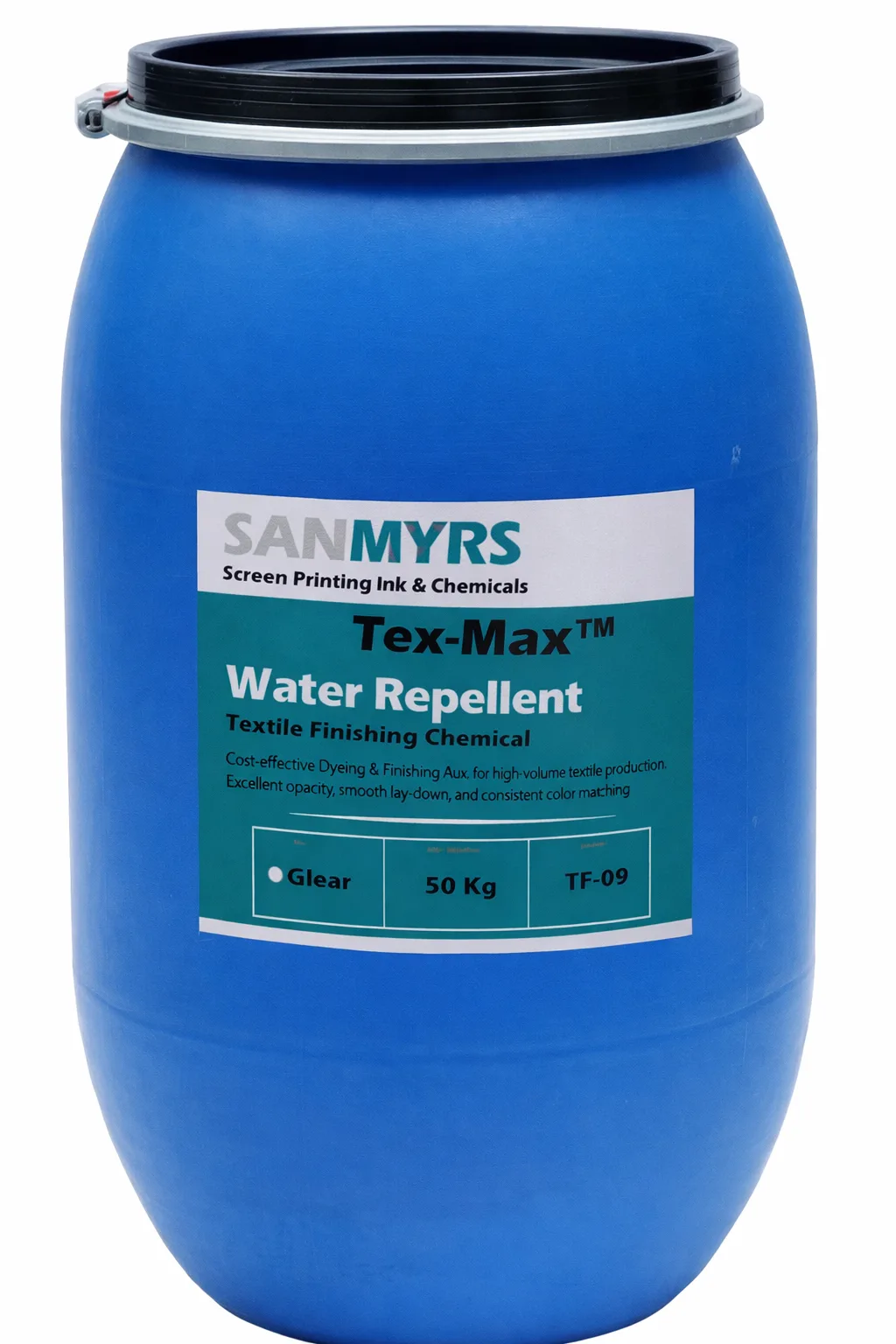
Water Repellent
Textile water repellent finishes are fluorocarbon (C6 DWR) or non-fluorinated hydrocarbon-based compounds applied to fabric surfaces to reduce surface energy and contact angle of water droplets to above 90°, causing water to bead and roll off rather than spreading and penetrating the fabric structure. Durable water repellency (DWR) is a critical functional requirement for outdoor apparel, rainwear, workwear, and technical textiles, where the ability to shed rain and moisture without saturation is essential for comfort and performance. Modern C6 and C8-free fluorocarbon-free DWR chemistries are increasingly used to meet PFAS restriction requirements in European and global export markets.
Key Applications
- DWR treatment of outdoor jackets, rainwear, and windbreakers
- Water repellent finishing of work and military uniforms
- Tent, awning, and technical outdoor fabric treatment
- Rain protection finishing on fashion outerwear and sportswear
Frequently Bought Together
Silicone Softener
Polydimethylsiloxane (PDMS) silicone softener is the most widely used textile softening technology, imparting a characteristic smooth, silky, and lubricating hand feel to synthetic and cellulosic fabrics through the formation of an oriented PDMS layer on fiber surfaces that dramatically reduces inter-fiber friction coefficients.
Textile Dyes & AuxiliariesHydrophilic Silicone Softener
Hydrophilic silicone softeners are polyether-modified polysiloxane compounds engineered to combine the soft, smooth hand-feel properties of conventional silicone with a hydrophilic molecular architecture that preserves or enhances the moisture wicking and absorbency of treated fabrics — a property that standard PDMS silicones compromise through their hydrophobic character.
Textile Dyes & AuxiliariesAmino Silicone Softener
Amino-functional silicone softeners contain reactive amine groups (primary, secondary, or tertiary amino groups) grafted onto the polysiloxane backbone, enabling the silicone to form strong electrostatic and reactive bonds with anionic fiber surfaces — particularly cotton and wool — resulting in significantly more durable softening effects and an exceptionally soft, cashmere-like tactile quality compared to unfunctionalized PDMS systems.