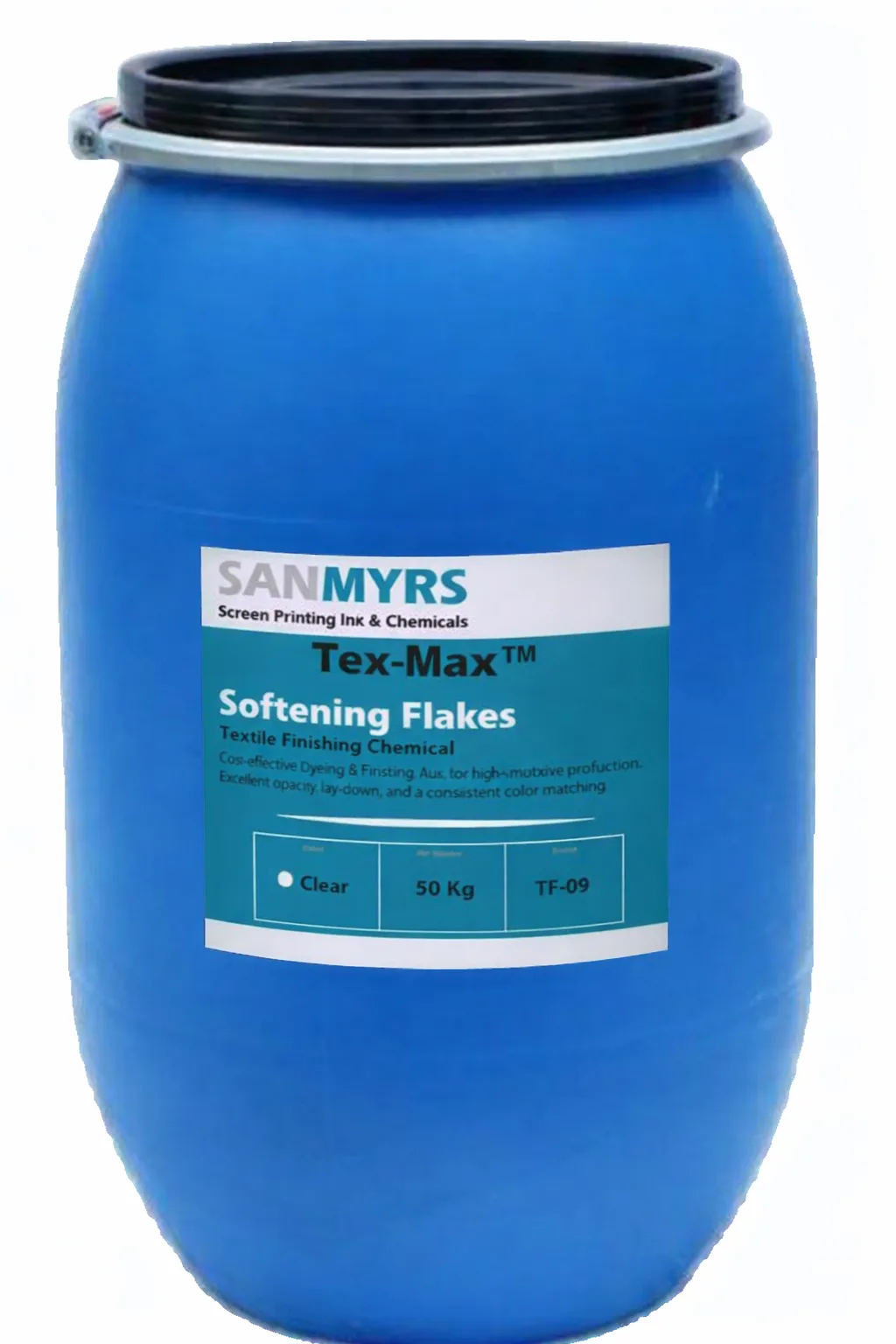
Softening Flakes
Textile softening flakes are concentrated solid cationic or non-ionic fatty quaternary ammonium compounds in flake or pellet form that dissolve readily in water to produce softening bath or pad liquors for cellulosic and synthetic fabric finishing. The solid form provides significant handling, storage, and transportation advantages over liquid softener emulsions, with higher active content and reduced packaging volume and weight. They produce a characteristic full, natural hand feel with excellent electrostatic reduction on cotton and polyester fabrics when applied by exhaust or pad processes.
Key Applications
- Garment washing and finishing softening applications
- Exhaust softening of yarn packages and beam dyeing lots
- Natural and full hand feel imparting on cotton and blended fabrics
- Cost-effective high-concentration softening for large-scale textile mills
Frequently Bought Together
Silicone Softener
Polydimethylsiloxane (PDMS) silicone softener is the most widely used textile softening technology, imparting a characteristic smooth, silky, and lubricating hand feel to synthetic and cellulosic fabrics through the formation of an oriented PDMS layer on fiber surfaces that dramatically reduces inter-fiber friction coefficients.
Textile Dyes & AuxiliariesHydrophilic Silicone Softener
Hydrophilic silicone softeners are polyether-modified polysiloxane compounds engineered to combine the soft, smooth hand-feel properties of conventional silicone with a hydrophilic molecular architecture that preserves or enhances the moisture wicking and absorbency of treated fabrics — a property that standard PDMS silicones compromise through their hydrophobic character.
Textile Dyes & AuxiliariesAmino Silicone Softener
Amino-functional silicone softeners contain reactive amine groups (primary, secondary, or tertiary amino groups) grafted onto the polysiloxane backbone, enabling the silicone to form strong electrostatic and reactive bonds with anionic fiber surfaces — particularly cotton and wool — resulting in significantly more durable softening effects and an exceptionally soft, cashmere-like tactile quality compared to unfunctionalized PDMS systems.