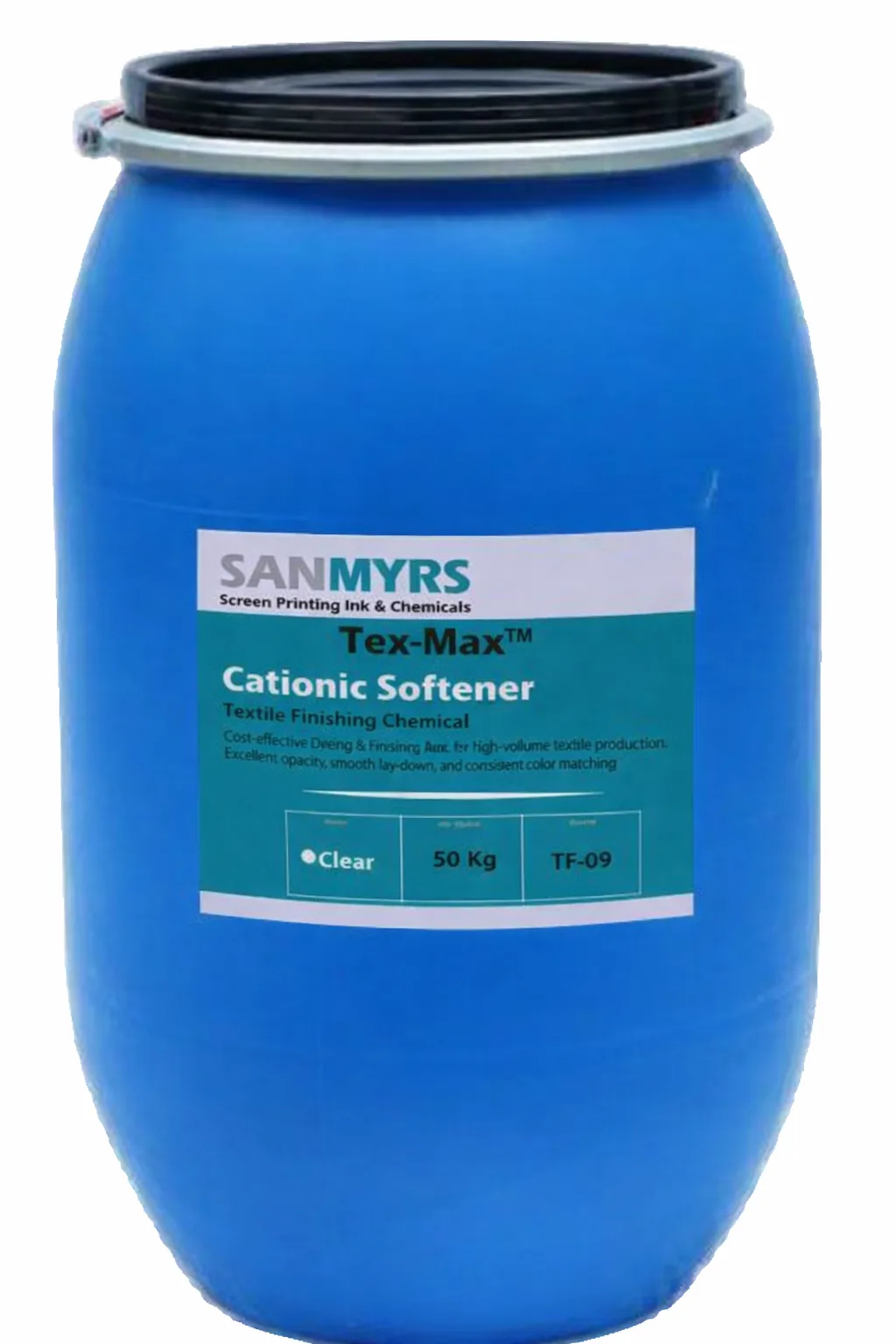
Cationic Softener
Cationic fabric softeners are quaternary ammonium compounds with long aliphatic hydrocarbon chains that exhibit strong substantivity to anionic cellulosic and protein fiber surfaces through electrostatic attraction, enabling exhaustion-bath application at very low concentrations with minimal pad bath requirement. The oriented hydrocarbon tails project outward from the fiber surface, creating a hydrophobic lubricating layer that imparts softness, smoothness, and reduced static charge to the treated fabric. Cationic softeners are incompatible with anionic dyebath chemicals and must be applied in dedicated post-dyeing finishing baths after thorough rinsing.
Key Applications
- Post-dyeing exhaust softening of cotton and viscose garments
- Antistatic treatment of synthetic fabrics in finishing
- Softening yarn before warping and weaving for reduced breakage
- Cost-effective fabric softening in garment washing and dyeing units
Frequently Bought Together
Silicone Softener
Polydimethylsiloxane (PDMS) silicone softener is the most widely used textile softening technology, imparting a characteristic smooth, silky, and lubricating hand feel to synthetic and cellulosic fabrics through the formation of an oriented PDMS layer on fiber surfaces that dramatically reduces inter-fiber friction coefficients.
Textile Dyes & AuxiliariesHydrophilic Silicone Softener
Hydrophilic silicone softeners are polyether-modified polysiloxane compounds engineered to combine the soft, smooth hand-feel properties of conventional silicone with a hydrophilic molecular architecture that preserves or enhances the moisture wicking and absorbency of treated fabrics — a property that standard PDMS silicones compromise through their hydrophobic character.
Textile Dyes & AuxiliariesAmino Silicone Softener
Amino-functional silicone softeners contain reactive amine groups (primary, secondary, or tertiary amino groups) grafted onto the polysiloxane backbone, enabling the silicone to form strong electrostatic and reactive bonds with anionic fiber surfaces — particularly cotton and wool — resulting in significantly more durable softening effects and an exceptionally soft, cashmere-like tactile quality compared to unfunctionalized PDMS systems.