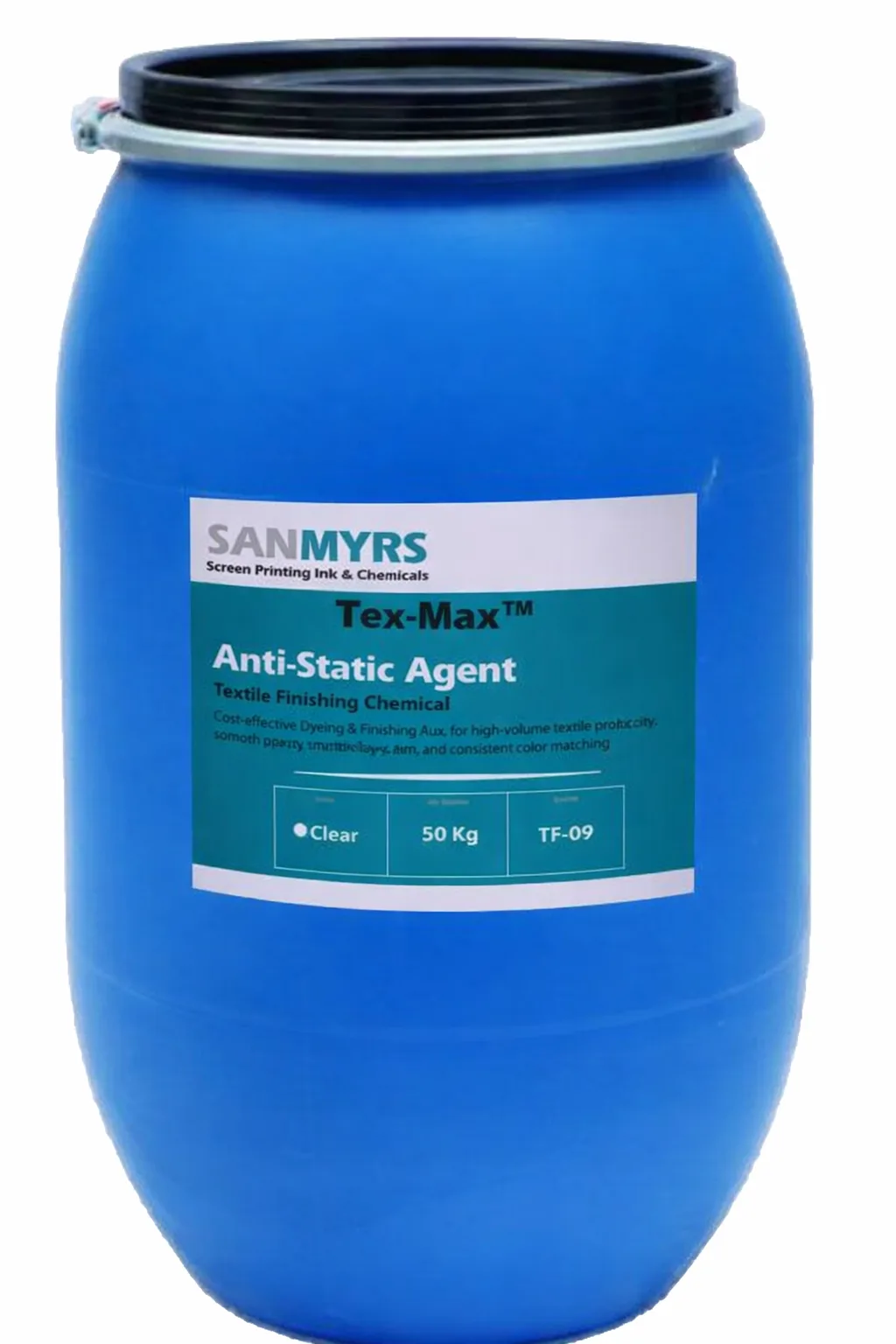
Anti-Static Agent
Textile antistatic agents are hygroscopic or conducting compounds applied to synthetic fabric surfaces to dissipate electrostatic charge buildup that occurs from friction between non-polar synthetic fibers during processing, wearing, and use. Hydrophilic non-ionic and quaternary ammonium antistatic agents function by attracting and retaining a thin layer of moisture on the fiber surface, providing a dissipating pathway for static charges that would otherwise accumulate to levels causing fiber clinging, processing disruption, and spark hazards in dusty environments. Durable antistatic finishes using reactive chemistry provide wash-resistant static control for technical textile applications.
Key Applications
- Static control finishing on polyester, acrylic, and nylon fabrics
- Processing antistatic treatment to prevent fiber clinging and fly in spinning
- Anti-static finishing for cleanroom and electronics handling garments
- Consumer textile finishing to prevent garment clinging and dust attraction
Frequently Bought Together
Silicone Softener
Polydimethylsiloxane (PDMS) silicone softener is the most widely used textile softening technology, imparting a characteristic smooth, silky, and lubricating hand feel to synthetic and cellulosic fabrics through the formation of an oriented PDMS layer on fiber surfaces that dramatically reduces inter-fiber friction coefficients.
Textile Dyes & AuxiliariesHydrophilic Silicone Softener
Hydrophilic silicone softeners are polyether-modified polysiloxane compounds engineered to combine the soft, smooth hand-feel properties of conventional silicone with a hydrophilic molecular architecture that preserves or enhances the moisture wicking and absorbency of treated fabrics — a property that standard PDMS silicones compromise through their hydrophobic character.
Textile Dyes & AuxiliariesAmino Silicone Softener
Amino-functional silicone softeners contain reactive amine groups (primary, secondary, or tertiary amino groups) grafted onto the polysiloxane backbone, enabling the silicone to form strong electrostatic and reactive bonds with anionic fiber surfaces — particularly cotton and wool — resulting in significantly more durable softening effects and an exceptionally soft, cashmere-like tactile quality compared to unfunctionalized PDMS systems.