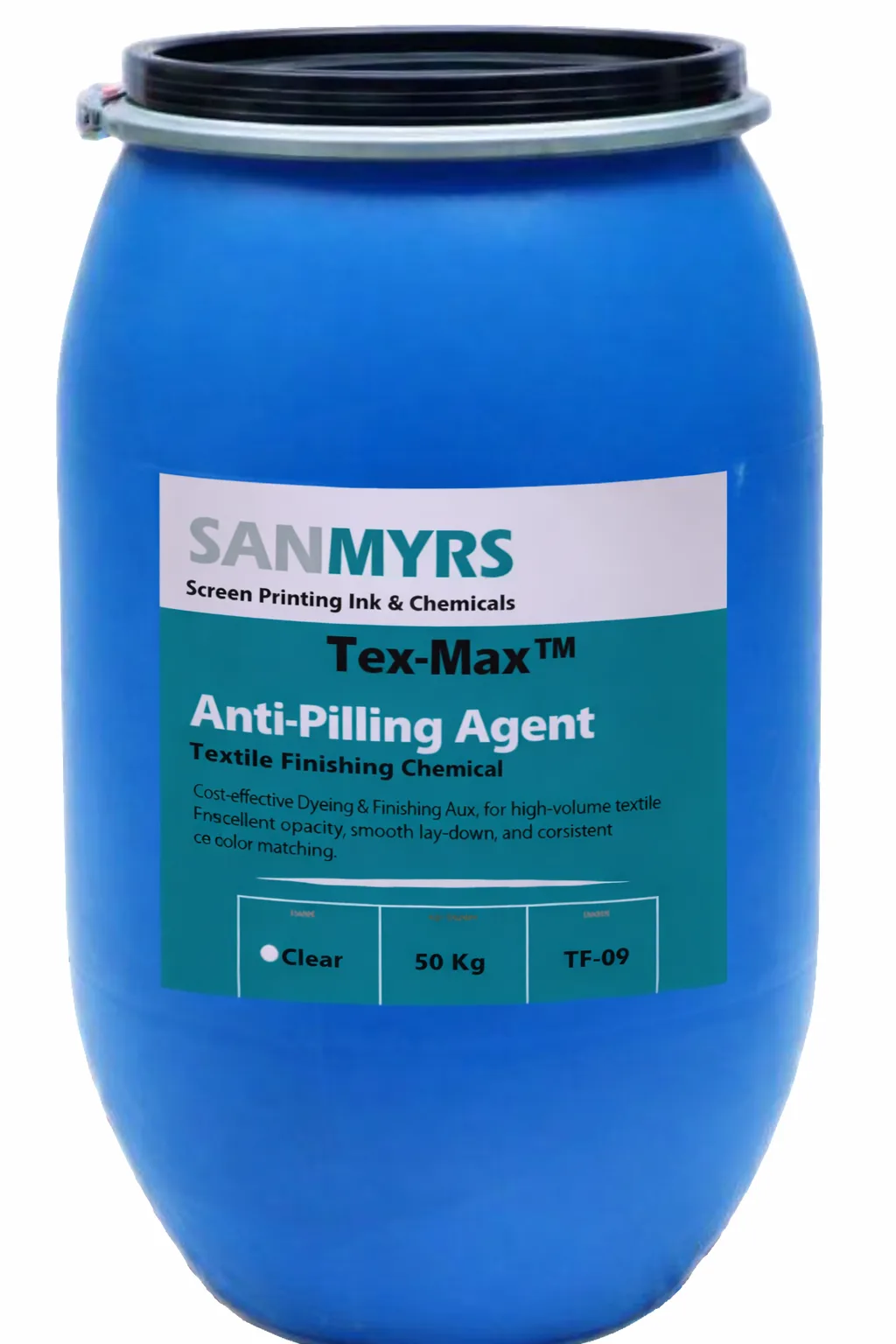
Anti-Pilling Agent
Textile anti-pilling agents are cellulose-specific enzyme systems (cellulase) or polymer-based finishes that reduce the tendency of knitted and woven fabrics to form surface pills — entangled fiber balls caused by the protruding ends of loose fibers becoming entangled and compacted through wear friction. Cellulase-based bio-polishing physically removes loose surface fibrils by enzymatic hydrolysis, permanently reducing pilling propensity with a concomitant improvement in fabric luster and smoothness. Polymer-based anti-pilling finishes cross-link loose fibers to the fabric surface, preventing their mobilization under friction without enzymatic fiber removal.
Key Applications
- Anti-pilling finishing of cotton and cotton-rich knitted garments
- Bio-polishing of knitwear for improved luster and pilling resistance
- Surface fiber anchoring on wool and acrylic blend fabrics
- Quality enhancement finishing for retail garment programs
Frequently Bought Together
Silicone Softener
Polydimethylsiloxane (PDMS) silicone softener is the most widely used textile softening technology, imparting a characteristic smooth, silky, and lubricating hand feel to synthetic and cellulosic fabrics through the formation of an oriented PDMS layer on fiber surfaces that dramatically reduces inter-fiber friction coefficients.
Textile Dyes & AuxiliariesHydrophilic Silicone Softener
Hydrophilic silicone softeners are polyether-modified polysiloxane compounds engineered to combine the soft, smooth hand-feel properties of conventional silicone with a hydrophilic molecular architecture that preserves or enhances the moisture wicking and absorbency of treated fabrics — a property that standard PDMS silicones compromise through their hydrophobic character.
Textile Dyes & AuxiliariesAmino Silicone Softener
Amino-functional silicone softeners contain reactive amine groups (primary, secondary, or tertiary amino groups) grafted onto the polysiloxane backbone, enabling the silicone to form strong electrostatic and reactive bonds with anionic fiber surfaces — particularly cotton and wool — resulting in significantly more durable softening effects and an exceptionally soft, cashmere-like tactile quality compared to unfunctionalized PDMS systems.